
4 Proven Strategies to Build a Pokemon Card Collection That Grows in Value
Most price spikes get all the attention — but the quiet crashes that follow are what actually cost Singapore collectors money. Here's how to collect smarter.Over the years, Pokemon cards have gone through massive boom cycles, with some cards multiplying five times their original price. If you're part of Singapore's collector community — whether you're hunting deals on Carousell or visiting Peninsula Plaza on weekends — you've probably seen this play out firsthand.
Here's what's interesting: when Pokemon card prices rise, everyone hears about it. It's on every forum, every Discord server, every local Facebook group. The Singapore Pokemon Collectors community lights up. Content creators talk about it. But the part that gets missed? When those same hyped-up cards come crashing back down months later, nobody revisits the topic. The posts get buried. The conversations move on.
That's exactly why understanding how to collect strategically matters — not just for enjoying the hobby, but for protecting the money you're putting into it. Whether you're spending S$300 on a booster box or S$500+ on a PSA 10 slab, you don't want to put that money down the drain.
This guide covers four fundamentals of smart collecting that will help you build a collection with a genuine chance of appreciation over time.
Executive Summary: Strategic Pokemon Card Collecting in Singapore
Key Principles:
- Gen 1 and Gen 2 Pokemon consistently command stronger long-term collector demand than newer generations- Items with broad market appeal outperform niche nostalgic picks in liquidity and price growth
- Sealed products have historically appreciated due to diminishing supply after print runs end
- Buying during hype periods is one of the most reliable ways to lose money in this hobby
Why This Matters for Singapore Collectors:
- Singapore's collector market is growing, with hundreds of Carousell listings tracked daily by tcgTalk- International price movements affect local SGD pricing, sometimes creating arbitrage opportunities
- With booster boxes now retailing at S$140–S$200+, every purchasing decision carries more weight than ever
Strategy 1: Focus on Timeless Pokemon — Not Just Any Pokemon
Pokemon spans nine generations, and with each new generation comes new Pokemon, new legendaries, new forms. But here's the reality many collectors discover too late: not all generations are equal when it comes to collectibility.Why Earlier Generations Hold More Value
The collector base for Pokemon has changed significantly over the past decade. A large portion of today's high-end collectors and investors aren't actively playing the new game releases — they're driven primarily by nostalgia. This means they're deeply connected to what they grew up with, and for many, that means Generation 1 and Generation 2.The people who fell in love with Pokemon Red, Blue, Yellow, Gold, and Silver in the late 1990s and early 2000s are now in their late 20s to mid-40s — with disposable income to spend on their hobbies. This creates sustained, long-term demand for cards featuring iconic Gen 1 and Gen 2 Pokemon.
Key insight: Gen 6 through Gen 9 Pokemon rarely reach the same level of desirability in the collector market as earlier generations, even when the artwork is outstanding.
A Real Example: Temporal Forces vs. Destiny Rivals
Consider Temporal Forces — a set featuring genuinely beautiful Special Illustration Rares. The artwork is cohesive and creative. But look at which Pokemon appear: they're almost exclusively Paradox Pokemon from Generation 9.Now compare that to Destiny Rivals, which features older fan favourites like Crobat, Ho-oh, and Mewtwo — Pokemon with deep nostalgic connections to older audiences.
The difference in market demand between these two sets reflects exactly this principle. Temporal Forces may one day become nostalgic for Gen 9 fans, but right now it doesn't carry the same broad collector appeal as sets built around classic Pokemon.
What This Means for Your Singapore Collection
If price appreciation matters to you, this doesn't mean you can't collect the Pokemon you love — it means being aware of what you're buying and why.Some of the Pokemon with the strongest long-term collector demand include:
- Charizard — arguably the most universally recognised collector card
- Mewtwo — consistently high demand across all formats and languages
- Blastoise, Venusaur, Gengar — Gen 1 starters and fan favourites with proven track records
- Lugia, Ho-oh, Umbreon, Espeon — Gen 2 icons with strong nostalgic pull
Singapore context: At Peninsula Plaza and local shops like Bricks Play and DEKTCGshop, cards featuring Gen 1 and Gen 2 Pokemon consistently command higher prices and sell faster than comparable Gen 8 or Gen 9 cards. This reflects the same principle playing out in our local market.
In Singapore's Carousell marketplace, you'll consistently see these cards trading at premiums versus similarly-graded cards featuring newer Pokemon. tcgTalk's Singapore Market Mapper data confirms this pattern across hundreds of local transactions daily.
Strategy 2: Make Sure Your Items Have Real Market Demand
One of the most common mistakes collectors make — especially when re-entering the hobby — is confusing personal nostalgia with market demand. These are two completely separate things.The Nostalgia Trap
Here's a scenario that plays out constantly: a collector returns to the hobby after years away, finds a card they loved as a kid, feels that emotional connection, and assumes the market will see it the same way. They spend S$200 on a PSA 10 of something deeply meaningful to them personally — and then discover there's almost no buyer market for it.A card can be deeply relevant to you while being almost entirely irrelevant to the broader market.
Personal Nostalgia vs. Broad Market Appeal
Consider a first edition Misdreavus from Neo Genesis. For a collector who grew up playing Generation 2, this might be a meaningful card with real nostalgic value. But list it on Carousell and you'll quickly discover the buyer pool is extremely thin. It's a niche collector's card, not a broad market card.Compare that to something like the Moonbreon (Umbreon VMAX Alternate Art from Evolving Skies) or the Charizard VSTAR from Brilliant Stars. These cards have massive, established buyer markets. When you list them on Carousell, in the SG TCG Trading Facebook group, or on SNKRDUNK, they move — and they move quickly.
What Actually Performs Well Over Time
Cards that consistently outperform in both liquidity and price growth tend to share these characteristics:- Iconic Pokemon with broad generational recognition
- Low population counts at high grades (PSA 10 scarcity matters)
- Strong set chase status — cards everyone was hunting when the set released
- Cross-market demand — desired by both Singapore collectors and international buyers
In Singapore's context, this is particularly important because our market connects to global pricing through platforms like SNKRDUNK and international sales. Cards with global demand benefit from international price floors that niche cards simply don't have.
Checking Market Demand Before You Buy
Singapore application: Before spending S$300+ on a card you love personally, check its Carousell listing history. Search completed sales. See how often it appears, how quickly it sells, and whether prices are trending up or sideways. tcgTalk's Singapore Market Mapper can help you identify which cards are actively trading versus sitting stagnant on the market.The rule isn't "don't buy cards you love" — it's "understand what you're buying." Sentimental purchases are completely valid. Just don't also expect them to appreciate if the market doesn't care about them the way you do.
Strategy 3: Understand the Power of Sealed Products
If there's one area of Pokemon collecting that consistently surprises new collectors, it's sealed product performance. Sealed products — booster boxes, ETBs, special collections — behave very differently from singles over time.Why Sealed Products Appreciate
Here's the fundamental dynamic: when a product goes out of print, the total supply is fixed. Every time someone opens a booster box, that sealed product leaves the market forever. The pie gets smaller, continuously — and as it does, the remaining sealed product becomes increasingly scarce.Think of any major Sword and Shield era set: Evolving Skies, Fusion Strike, Chilling Reign. All are out of print. All have seen significant price appreciation compared to their original retail prices.
The key mechanism: Most people want to open sealed products. That's natural — there's something exciting about the mystery of what's inside. But precisely because most people open them, the population of sealed products shrinks over time, pushing prices up for those who hold.
Sealed vs. Singles in Singapore
In Singapore's Carousell market, you'll see both sealed and singles traded actively. But their price behaviour differs significantly:Sealed products tend to:
- Have more stable, less volatile pricing
- Appreciate steadily as supply diminishes
- Sell at prices close to what you paid even if you need to liquidate
- Be easier to price accurately
Singles tend to:
- Be more volatile — can spike or crash sharply
- Reflect trend and hype movements faster
- Require more market knowledge to price correctly
- Drop significantly during market corrections
This doesn't mean you should only collect sealed — singles are the actual treasures that define a set. But if you're building a collection that appreciates, having sealed in your portfolio provides a meaningful ballast against volatility.
Which Sealed Products Are Worth Watching in Singapore?
Keep an eye on:- Out-of-print Sword and Shield sets — Evolving Skies ETBs and booster boxes are already appreciating
- Early Scarlet and Violet sets — print runs ending, becoming harder to find at retail
- Japanese sealed products — often undervalued on Carousell relative to international prices
- Special collections and tins — lower price points make them accessible entry positions
Where to buy sealed in Singapore: Retail through Popular, Kinokuniya, and local shops like Concept City and Bricks Play. Carousell for secondary market pricing. SNKRDUNK for Japanese imports.
A useful exercise: Pull up any out-of-print booster box and look at the full price history going back to launch. Select any product from Sword and Shield or Sun and Moon and see how it has traveled over time. The data consistently tells the same story.
Strategy 4: Don't Get Caught in Hype Periods
This is perhaps the most important strategy of all — and the hardest to follow when you're in the middle of a hype cycle.How Hype Periods Work
Pokemon is everywhere. There's media circulating constantly: video game announcements, anime events, collaborations, social media content. Any of these can create sudden spikes in demand for specific cards.When a hype period hits, here's the typical pattern:
1. A card or card type suddenly gets community attention
2. Everyone starts talking about it simultaneously
3. Prices spike — sometimes dramatically
4. Collectors fear missing out and buy in at the peak
5. Weeks or months later, the hype fades
6. Prices correct, often below pre-hype levels
7. Nobody really revisits those cards or those conversations
This pattern has played out repeatedly across the hobby. Looking back at the last three to four years, virtually every significant hype spike has been followed by a meaningful correction.
Examples that illustrate this cycle:
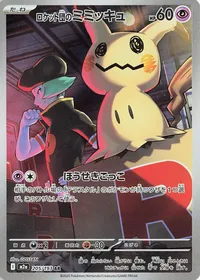
- Japanese female trainer cards in 2023 — saw massive price spikes followed by corrections
- Specific artist-driven trends — cards by particular illustrators get hyped, then normalise
- Set release speculation — pre-release hype rarely matches actual post-release market behaviour
The Singapore Hype Market
Singapore's collector community is highly connected — Facebook groups, Telegram channels, Discord servers, and Carousell's notification system all accelerate information spread. When a card spikes globally, Singapore collectors often see it within hours.This is both an advantage and a risk. The advantage: you hear about opportunities quickly. The risk: by the time something is widely discussed in the SG TCG community, the best prices are already gone.
The principle: If you're seeing a card discussed everywhere simultaneously — forums, Facebook groups, Discord — you've likely already missed the optimal buying window. The people who benefited bought before the community conversation started.
What to Do Instead
Rather than chasing hype, consider this approach:1. Track cards you've identified using Strategies 1–3 (timeless Pokemon, broad demand, quality sealed)
2. Wait for price corrections — after hype periods end, prices often drop below where they started
3. Buy on quiet weeks — the best prices are usually available when nobody's talking about a card
4. Use Singapore Market Mapper data — tcgTalk tracks actual Singapore transaction prices so you can identify when local prices are elevated versus normal
The irony is that disciplined collectors who ignore hype and buy during quiet periods consistently outperform those who chase trends.
Actionable Recommendations
For New Singapore Collectors:
1. Research which Gen 1 and Gen 2 Pokemon have the strongest Carousell transaction history2. Use tcgTalk's Singapore Market Mapper to understand current local prices before purchasing
3. Consider one out-of-print sealed product as a stable foundation for your collection
4. Commit to a 48-hour waiting period before any major purchase you discover during a hype wave
For Experienced Collectors Building for Value:
1. Audit your collection — identify items with broad market appeal vs. niche personal picks2. Look for Sword and Shield era sealed that is still relatively accessible
3. Monitor hype cycles but commit to waiting them out before buying
4. Use SNKRDUNK's price history alongside tcgTalk data for a comprehensive picture
For Budget Collectors (Under S$50 per purchase):
1. Focus on raw copies of sought-after Gen 1/Gen 2 cards before considering PSA grades2. Look for Carousell listings with motivated sellers (descriptions mentioning "quick sale" or "clearing collection")
3. Sealed packs and mini tins offer entry-level sealed exposure without the large outlay of a full booster box
Conclusion
Building a Pokemon card collection that appreciates in value isn't about being perfect — it's about being strategic with the majority of your purchases. The four strategies covered here won't guarantee every card goes up in price. But they will significantly improve your odds compared to buying reactively.Singapore's Pokemon card market is maturing rapidly. As more local transaction data becomes available through platforms like tcgTalk's Singapore Market Mapper, the information advantage increasingly goes to collectors who use data rather than hype to guide their decisions.
The goal is a collection you love that also holds its value — and for Singapore collectors who approach this thoughtfully, that's completely achievable.
Data insights sourced from tcgTalk's Singapore Market Mapper, tracking 500+ daily listings across Carousell, Facebook Marketplace, and SNKRDUNK. Market conditions change rapidly; always verify current prices before making purchasing decisions.