
How to Spot Undervalued Pokémon Cards Before They Spike in Singapore
The cards that 10× in price were always hiding in plain sight — here's how to find the next one.There's something fascinating about undervalued Pokémon cards. They sit right in front of everyone, and nobody really notices. Then when prices start climbing, collectors everywhere have the same collective aha moment: "Oh, of course. That was always going to happen."
If you ask what the most overlooked concept in Pokémon collecting is, it's this: spotting undervalued cards before they move. And despite how obvious it sounds, it remains the most consistently missed opportunity in the hobby — including here in Singapore.
Why This Matters More Than Ever
Prices in the Singapore Pokémon TCG market have changed dramatically. What you were paying for a new booster box in 2024 can be nearly double what the same box costs today. The word "affordable" and "Pokémon" don't really belong in the same sentence anymore.That makes the ability to spot undervalued cards even more important. You're not just looking for a good deal — you're trying to maximise your collecting budget in a market that's getting more expensive every year.
The good news? Undervalued cards follow patterns. Real, repeatable patterns that have played out across multiple eras of the TCG. Once you know what to look for, you'll start seeing them everywhere — including in local listings on Carousell and SG TCG Trading groups on Facebook.
Pattern 1: Rarity + Pokémon Popularity = Long-Term Value
When a card releases, always look at two things together: the rarity and the Pokémon on the card.This sounds basic, but the combination matters more than either factor alone.
High rarities to watch for:
- Special Illustration Rares (SIR)
- Alternate Art cards
- Textured artwork cards
- V-Max cards
- High-rarity promo versions of popular Pokémon
Pokémon that consistently perform:
Popular Pokémon — ones that collectors have a personal connection with — almost always outperform their less iconic counterparts over time. If you look at the Mega Evolution era, the top chase cards aren't surprise Pokémon. They're Mega Charizard X and Mega Gengar. Both deeply loved. Both extremely predictable in hindsight.
Yes, there are outliers. Seismitoad, for example, has commanded surprisingly high prices despite not being a fan favourite. But exceptions like that are rare. The broad trend is clear: iconic Pokémon in high rarities = stronger long-term demand.
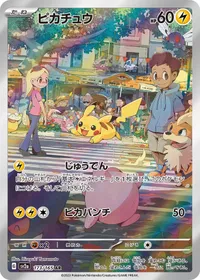
The big caveat: If a card is already a popular Pokémon and a Special Illustration Rare, it won't be undervalued at launch. The Pikachu from Ascended Heroes was never going to be cheap — it was already expensive from day one. The opportunity is elsewhere.
For Singapore collectors: When browsing Carousell or visiting shops like Bricks Play or DEKTCGshop, keep this filter in mind. A card from a "lesser" set featuring a well-loved Pokémon in a high rarity is worth a second look, especially if the set isn't getting much attention.
Pattern 2: Promo Cards Almost Always Start Undervalued
This is the single biggest pattern for true undervalued gems, and it plays out over and over again.Promo cards are undervalued at release for a few reasons:
1. Perceived abundance — Collectors assume promos are easy to get because they come with products. They feel "free," so they don't assign much monetary value to them.
2. Limited acquisition window — In reality, promos are only available for a short time and via a single purchase channel. Once that window closes, supply is capped.
3. Grading difficulty — Many promos come in plastic packaging or as box toppers, making them much harder to grade in pristine condition. That scarcity in high grades adds significant value later.
The proof is everywhere:
- Mew SIR promo from the 151 Ultra Premium Collection — sold for around USD $4 (~SGD $5.40) in early 2024. It's now selling consistently above USD $75 (~SGD $101). That's an 18× increase.
- Kindra and Greninja SIRs from Shrouded Fable — dismissed as promo cards from a "trash set" at launch. Kindra went from USD $8 (~SGD $11) to over USD $70 (~SGD $94).
- Stained glass promos from Hidden Fates — nobody cared. It took six years for these to get serious market movement. But when they moved, they moved hard.
- Lucario V-Star promo from Crown Zenith ETBs — dismissed as a freebie. Now reassessed as a legitimate collectible as Crown Zenith's broader market climbs.
The common thread: collectors see promos as abundant when they're released. They're wrong. Supply is finite, and when that realisation hits the broader market, prices move quickly.
For Singapore collectors: Keep an eye on current promo cards. When a new ETB or special collection comes with a promo, check the Pokémon and the artwork. If it features a popular Pokémon with a unique illustration, it may be sitting at its floor price. Local shops like Cosmic Vault in Yishun often stock these products — it's worth grabbing a few before the window closes.
Pattern 3: Look for Cards Being Overshadowed at Release
Even great cards can be ignored at launch if the timing is bad.Consider the Shrouded Fable promos again. When they released, a large portion of the collector community was already mentally done with the set. They were focused on what came next. So even strong cards with beautiful artwork got minimal attention.
The same dynamic happened with the Mew SIR promo from 151. When 151 released, everyone's attention was on the Japanese Special Art Rare — the version you could pull from booster packs. The guaranteed promo felt like an afterthought. Collectors globally didn't care about it.
That created a perfect buying window.
Signs that a card might be overshadowed:
- Released alongside a much more hyped card or set
- Part of a product that people are buying for something else (e.g., a "guaranteed hit" that steals all the attention)
- Comes out during a quiet period when collectors are waiting for the next big thing
- Featured in a set the community wrote off too quickly
For Singapore collectors: The SG TCG Trading group and Singapore Pokemon Collectors Facebook community are useful here. When you see widespread negativity about a set or product, that's often when the real undervalued opportunities emerge. Sentiment shifts over time, and prices follow sentiment.
Pattern 4: Watch What's Happening in the Pokémon Franchise
Pokémon TCG prices don't exist in isolation. What happens in the video games, anime, and media can absolutely spill over into card prices — sometimes dramatically.The clearest recent example: Mega Evolution Pokémon cards.
For years, old Mega Evolution cards from the XY era were selling for USD $10–$15 (~SGD $13.50–$20). You could buy PSA 10s of popular Mega Pokémon for around USD $100–$150 (~SGD $135–$200). Nobody wanted them.
Then Pokémon Legends: Z-A was announced, bringing Mega Evolution back. The market reacted fast. Cards that had sat stagnant for years spiked across the board.
Another example: Ditto cards surged when Pokémon Picoia featured Ditto as the main character. That was a connection point most collectors missed — but in hindsight, it was a predictable spillover effect.
The pattern here isn't about predicting exactly which Pokémon will get the spotlight. It's about understanding that franchise moments create TCG ripple effects, and staying aware of what's happening in the broader Pokémon universe gives you an edge.
Cards currently worth watching:
- Terastal Pokémon from Scarlet and Violet — if any featured Pokémon return in future games, related SIRs could spike
- Gigantamax Pokémon — currently undervalued and from a single generation (Gen 8). As Sword and Shield kids grow up and get nostalgic, these could climb significantly
- Any Pokémon that starts appearing prominently in new media or game announcements
Putting the Patterns Together
The most powerful undervalued cards usually tick several boxes at once:- Popular Pokémon ✓
- High rarity or unique artwork ✓
- Promo format (limited acquisition window) ✓
- Overshadowed at release ✓
- Franchise moment pending or recent ✓
You won't always find all five together. But when you see two or three aligning, that's worth paying attention to.
The other important thing to remember: these cards take time. Undervalued cards don't spike overnight. The stained glass Hidden Fates promos took six years. The 151 Mew promo took over a year. Patience is part of the strategy — but when their time comes, the moves can be substantial.
Local Singapore Market Considerations
When buying potential undervalued cards locally, a few things to keep in mind:- Check Carousell price history — Use tcgTalk's price comparison tools to understand how Singapore pricing compares to global benchmarks. Local prices on Carousell can sometimes lag global movements, creating short arbitrage windows.
- Facebook group sentiment — When Singapore Pokemon Collectors or SG TCG Trading groups dismiss a card as overpriced or irrelevant, that's often worth noting as a contrarian signal.
- Condition matters even more for promos — Given how difficult promo cards are to grade, raw near-mint copies bought locally at good prices can be excellent grading candidates.
- Shop inventory — Local shops like Bricks Play and DEKTCGshop occasionally have old products at original retail with strong promo contents still inside. These can represent excellent value.
Actionable Steps for Singapore Collectors
For newer collectors (budget under SGD $500):
1. Identify 3–5 current promo cards featuring popular Pokémon2. Check their Carousell listings — if they're being sold for near-nil margins, that's a buying window
3. Focus on cards from sets the community has already moved on from
4. Use tcgTalk's /price-comparison to benchmark Singapore prices against global data
For experienced collectors (budget SGD $500+):
1. Monitor franchise news — new game announcements, anime developments, movie announcements2. Build positions in promos from 2023–2024 sets that haven't had their moment yet
3. Consider PSA 10 copies of promo cards — the premium for a PSA 10 promo can be significant once the card gets attention
4. Track sentiment shifts in the community — when negativity turns to interest, prices often follow within weeks
Conclusion
Undervalued Pokémon cards aren't a mystery. They follow patterns that have played out repeatedly across generations of the TCG. The collectors who capitalise on them aren't lucky — they're paying attention to rarity, Pokémon popularity, promo structures, release timing, and franchise developments.Right now, there are cards sitting in the Singapore market at prices that will look cheap in a few years. The question is whether you'll recognise them before the aha moment hits everyone else.
Use tcgTalk's price comparison tool to track Singapore market data and spot when local prices diverge from global trends — those windows don't stay open long.
Data references from global TCG market tracking. Singapore prices approximate based on SGD/USD exchange rates. Always research current market conditions before making purchasing decisions.