
Pikachu [Green] #25 Carddass price spike explained
If you were checking your notifications this morning expecting the usual steady climb for vintage Japanese promos, you might have been caught off guard. We aren't just seeing a little bit of movement today; we are seeing a full-scale breakout.The headline act is undoubtedly the Pikachu [Green] #25 from the 1996 Pokemon Japanese Carddass set. This card just experienced a massive 58.3% surge, jumping from $137.57 to $217.75. When you look at the graded landscape, the story gets even more intense. While an ungraded copy is sitting at $81.29, the premium for a PSA 10 is a staggering $3,500. This isn't just a "nice day" for Pikachu collectors; this is a signal that the ceiling for high-grade vintage Japanese assets is being re-evaluated in real-time.
But as any seasoned collector knows, when the electric mouse starts sparking this hard, the rest of the market often feels the heat—or the chill.
Is the Pikachu craze spreading to other promos?
It’s not just the Green Carddass Pikachu finding its footing. We are seeing a synchronized movement across several Pikachu-centric assets. The Pikachu [Polish] #PW from the 2010 World Collection saw a significant 46.6% jump, moving from $169.99 up to $249.27. What’s interesting here is the spread between the raw and graded prices; a PSA 10 is sitting at $306.99, which is actually a relatively narrow premium compared to the Carddass jump. It suggests that while the raw market is hunting for copies, the top-tier slab market is already stabilizing.The momentum extends to the Pichu Bros #28/P Pokemon Japanese Promo, which also experienced a major 45.3% increase, climbing from $141.78 to $206. The demand for these adorable, high-end Japanese promos seems to be the primary driver of today's gains.
Even the more niche, modern-adjacent cards are participating in this upward trend. The Guzma #201 from the Pokemon Chinese AC2BC set saw a massive 59.5% spike, moving from $8/81.29 to $129.68. This is particularly interesting because the graded market for this card is extremely tight—a PSA 10 is only $199, meaning the movement is heavily concentrated in the raw/ungraded market. Collectors are clearly hunting for ungraded copies to grade themselves.
Finally, the M Charizard EX #12 from Pokemon Generations joined the party with a 60% surge, climbing from $78.96 to $126.37. If you look at the 30-day history, this card has been on a steady climb. It was down 19.1% back on May 11th, recovered to $88.12 by May 14th, and has now exploded. The PSA 10 premium here is massive—$2,437.19—indicating that while the raw price is moving, the true "value" is being locked away in high-grade slabs.
Why is Pikachu #7 Japanese Melee Pokemon Scramble price dropping?
It is a bittersweet day for Pikachu fans. While the newer and more niche promos are mooning, the "heavy hitter" of the group—the Pikachu #7 from the Pokemon Japanese Mescramble set—has taken a significant hit. It dropped 33.2%, falling from $1496.41 down to $1000. This is a massive loss in absolute dollar terms. When you are dealing with a card where a PSA 10 is valued at $11,100, a thousand-dollar drop feels like a seismic shift. It looks like some high-end holders might be liquidating, or perhaps the market is simply correcting after a period of extreme overextension.
What is causing the Mew and Charizard 1st Edition price drop?
The carnage isn't limited to Pikachu. We are seeing a heavy sell-off in some of the most iconic "blue chip" cards in the hobby.The Mew [1st Edition] #119 from the Pokemon Japanese Expedition Expansion Pack saw a major 39.9% decline, sliding from $491 down to $295. This is a notable correction for a card that usually acts as a stabilizer for the market.
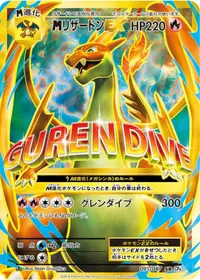
Similarly, the M Charizard EX [1st Edition] #91 from the Pokemon Japanese 20th Anniversary set took a massive 40.9% hit, dropping from $253.93 to $150. This is particularly jarring given that the BGS 10 for this card is valued at $4,680. When the raw price drops this significantly while the top-tier slab prices remain high, it usually means the "middle class" of collectors (those buying ungraded or mid-grade copies) are panicking, even if the ultra-high-end investors are holding steady.
We are also seeing significant retreats in other Pikachu and Fire-type assets:
* Pikachu #112/PCG-P (Pokemon Japanese Promo): A massive 52.1% drop, falling from $127 to $60.84.
* Houndoom #8 (Pokemon Japanese Tyranitar Constructed Starter Deck): A 38.7% decline, moving from $114.11 down to $70.
Market Snapshot: The Big Picture
While individual cards are swinging wildly, the broader market data for May 31st shows some truly astronomical outliers.The Booster Box [1st Edition] from Pokemon Jungle was the biggest dollar gainer of the day, adding a staggering +$2551.52 to its value. This is the kind of movement that defines the "old school" collector's dream. On the flip side, the Poncho-Wearing Pikachu #230/XY-P (Pokemon Japanese Promo) was the biggest dollar loser, shedding $1208.13.
Perhaps the most eye-popping stat of the day is the Mini Booster Pack from Pokemon Forbidden Light, which saw a 649.2% increase. While such massive percentage gains in small-format products often reflect low liquidity (a single sale can skew the percentage), it certainly adds to the sense of movement in the market today. Conversely, Delphox #74 (Pokemon Promo) saw an 83.1% drop, marking the top percentage loser.
Summary for Collectors
Today’s market is a tale of two extremes. On one side, we have a "Pikachu Mania" 2.0, where specific, niche items like the 1996-era proxies and certain Japanese promos are seeing massive influxes of interest. On the other side, we are seeing a significant correction in established heavyweights like the Expedition-era Mew and certain 20th Anniversary Charizards.If you are holding the high-end 20th Anniversary cards, the volatility is clearly hitting your pocketbook. However, if you are hunting for the mid-tier Japanese promos and the "new" classics like the 90s-era Japanese prints, the momentum is firmly in your favor.