
Why is Stakataka GX #107 from Japanese Sky-Splitting Charisma price spiking?
If you woke up this morning, checked your eBay notifications, and saw a number that looked like a typo, you aren't alone. We are witnessing some of the most violent volatility I have seen in the TCG market in years.The Pokémon market is currently behaving less like a stable investment class and more like a high-frequency trading floor during a flash crash. We have massive, astronomical percentage gains on single cards sitting right next to total, catastrophic collapses of high-end booster boxes.
Let’s dive into the madness of the May 3rd/4th market movement.
The 2393% Anomaly: Stakataka GX #107
Let’s address the elephant in the room. Stakataka GX #107 from Pokemon Japanese Sky-Splitting Charisma didn't just "go up." It exploded. We are looking at a move from $9.69 to $241.60, a staggering +2393.3% increase in a single session.When you see a percentage that high, it’s rarely a fundamental shift in the popularity of the Pokémon itself. This is almost certainly a liquidity event or a "single copy" phenomenon. In the world of low-end Japanese singles, a single high-end collector or a specialized reseller snagging a rare error or a specific high-grade copy can send the "market price" into the stratosphere. At $9, you’re looking at a casual buyer; at $241, you’re looking at a dedicated collector making a statement. Whether this is sustainable is highly doubtful, but for one day, Stakataka is the king of the mountain.
The Heavy Hitters: Neo Revelation and Plasma Storm
While Stakataka provided the percentage shock, the real money—the actual dollar volume—is moving in the vintage sealed era.Is the 1st Edition Neo Revelation Booster Box price hike permanent?
The biggest mover in terms of raw cash is the Booster Box [1st Edition] (Pokemon Neo Revelation). This box surged from $16,626.31 to $69,042.77, a massive +315.3% jump. This is a +$52,416.46 increase in value.
This isn't just a spike; this is a tectonic shift. To see a 1st Edition Neo Revelation box jump over $50k in a single day suggests a massive institutional-level buy or the realization of a long-held supply shortage. When you see an ungraded box valued at roughly $34,938.85 suddenly trading at nearly $70k, the market is telling us that the "ceiling" for Johto-era sealed products has been completely shattered.
Following this trend of high-end vintage strength, the Booster Box (Pokemon Plasma Storm) also saw a significant climb, moving from $9,600 to $15,540.31 (+61.9%). This indicates that the "Black/White" era sealed products are riding the coattails of the Neo-era hype.
Japanese Singles: Reshiram and Gyarados GX
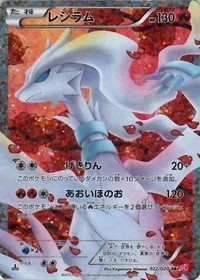
The momentum isn't just restricted to sealed boxes; the high-end Japanese single market is seeing some very healthy, structured growth.Reshiram [1st Edition] #22 from Pokemon Japanese Shiny Collection moved from $114.33 to $178.31 (+56%). What makes this move interesting is the spread between raw and graded copies. Currently, an ungraded copy sits at around $96.40, but if you are hunting for the big slabs, the premium is massive. A PSA 10 is commanding $1,660, while a BGS 10 is even higher at $2,158. This tells me that while the "market price" for the card is moving, the real value is being driven by the scarcity of Gem Mint specimens.
We see a similar story with Gyarados GX #56 from Pokemon Japanese Ultradimensional Beasts. It climbed from $37.75 to $98 (+159.6%). Much like the Reshiram, the graded premiums are where the action is. An ungraded copy is roughly $61.95, but a PSA 10 jumps to $250.23, and a BEX 10 hits $325. The gap between a raw copy and a PSA 10 is widening, suggesting collectors are increasingly willing to pay a massive premium for perfection in the Ultradimensional Beasts set.
The Crash: Why is Japanese Challenge from the Darkness losing value?
It wasn't all sunshine and Charizards today. We saw a devastating collapse in the Japanese modern-vintage crossover market.The Booster Box (Pokemon Japanese Challenge from the Darkness) suffered the most significant loss in terms of dollar value, plummeting from $29,650 to $489.5, a terrifying -98.3% drop. This is the "biggest loser" by both percentage and dollar amount (-$29,160.5).
A drop of this magnitude is almost never organic. This looks like a massive correction or a "fat finger" error in a major marketplace listing that has since been corrected, or perhaps a large holder liquidating a massive collection at once. However, for anyone holding this box, it’s a sobering reminder of how quickly "high-end" can turn into "mid-tier" in the Japanese market.
The Mid-Tier Slide: Crystal Guardians and Carddass
The downward pressure extended into some of our more reliable mid-tier staples.* Blister Pack (Pokemon Crystal Guardians): This saw a nearly 50% haircut, dropping from $1,950 to $986.5 (-49.4%). For collectors of e-Reader era products, this is a significant retreat from the highs we saw earlier this year.
* Mewtwo Prism [Red] #150 from Pokemon Japanese 1996 Carddass: This nostalgic powerhouse dropped from $199.99 to $123 (-38.5%). Carddass products are notoriously volatile because they rely heavily on the "nostalgia cycle" of specific collectors.
* Foodin [Embossed] (Pokemon Japanese Meiji Promo): A brutal -55.7% drop, moving from $69.99 to $31. Looking at the graded data, a PSA 10 for this card is currently $431.33. This suggests the price drop is almost exclusively affecting raw, lower-grade copies, while the "holy grail" specimens remain insulated.
* Bayleef [League Promo] #2 from Pokemon BREAKpoint: This one is in a long-term freefall. Looking back 8–30 days, it was at $40, then dropped to $30 in late April, and has now cratered to $15.04 (-49.9%). This isn't a one-day spike; this is a fundamental loss of interest in this specific promo.
Summary: Market Takeaways for May 2026
If you are looking for a strategy based on today's data, you have two very different paths:1. The "Blue Chip" Aggression: The massive movement in Neo Revelation 1st Edition and Plasma Storm suggests that the "Old Guard" of Pokemon (the Wizards of the Coast era) is entering a period of extreme scarcity-driven inflation. If you have the capital, these are the assets showing massive momentum.
2. The "Speculative" Arbitrage: The massive gap between raw and graded prices for Reshiram [1st Edition] and Gyarados GX suggests that the "value add" in grading is currently at an all-time high. If you can find raw copies that look like 10s, the ROI on grading them is statistically much higher than the current market volatility might suggest.
The bottom line: The market is bifurcating. We are seeing extreme wealth concentration in vintage sealed products, while the mid-tier "collectible" singles are experiencing heavy corrections. Watch the Stakataka numbers closely—if it stays above $200, we might be looking at a new era of Japanese single volatility.