
Why is A Challenge to Adventure Foil #27 Topps price spiking so hard?
If you were checking your eBay notifications this morning and saw a notification for a ten-dollar piece of cardboard suddenly worth enough to buy a nice dinner, don't rub your eyes. You aren't hallucinating.The Pokémon TCG market is currently behaving like a fever dream. We are seeing a massive divergence in the market today, April 30, 2026. On one end, we have the "blue chip" titans—the heavy hitters like 1st Edition Base Set—undergoing massive, sustained rallies. On the other, we have the "flash in the pan" anomalies and the sudden, sharp corrections in the mid-tier vintage and modern eras.
Let’s dive into the madness.
The 1571% Outlier: A Challenge to Adventure Foil #27
We have to start with the elephant in the room. A Challenge to Adventure [Foil] #27 from the Pokemon 2000 Topps Movie set has seen a price movement that defies traditional market logic. It went from $10.03 to $167.64. That is a 1571.4% increase in a single day.Now, let’s be realistic. You don't get a 1500% jump because a fundamental shift in the Pokémon economy occurred overnight. This is a classic "liquidity spike." When a card is priced at $10, a single collector deciding they want to "buy the dip" or a single high-end collector grabbing a handful of copies can skew the perceived market value instantly. It’s an anomaly, likely driven by a single high-value sale or a sudden realization of the scarcity of these Topps movie promos. While it’s a fun headline, don't go mortgaging your house for Topps foils just yet.
The Heavy Hitters: Is the 1st Edition Base Set Booster Box still going up?
While the Topps spike is the headline, the real story for serious investors is the Booster Box [1st Edition] (Pokemon Base Set).This isn't a one-day fluke. If we look at the 30-day history, we see a terrifyingly consistent upward trajectory. On April 10, this box was sitting at a much lower $4900. By April 20, it had climbed to $6544.27. Today, it has surged to $10263.5, a 56.8% increase in the last week alone.
This is the "Gold Standard" of the hobby. When the 1st Edition Base Set Booster Box moves like this, it signals massive capital inflow into the highest tier of the hobby. We aren't even looking at raw copies anymore; the ungraded market value for these is hovering around $104,575. This is institutional-grade movement. This isn't speculation; this is a supply-side squeeze.
Analyzing the Mid-Tier Gains: Machamp, Charmeleon, and Reshiram
Away from the extreme outliers, we see some very healthy, sustainable growth in the mid-tier.Machamp [Masaki Promo] #68 (Pokemon Japanese Vending) is having a stellar month. It jumped from $320 to $589.66, an 84.3% increase. What’s fascinating here is the grading spread. If you look at the PSA 10 prices, they are sitting at $5537, while a BGS 10 is up at $7198. The premium for BGS 10 is incredibly wide right now, suggesting that collectors are specifically hunting for the "perfect" specimen, driving the top-end prices much harder than the raw market.
Similarly, Charmeleon [State Championship] #9FR (Pokemon Dragon) saw a solid 41.7% bump, moving from $119.99 to $169.99. For those looking at ungraded vs. graded, the gap is interesting: an ungraded copy is roughly $70.49, but a PSA 9 jumps to $128.71. The value is clearly tied to the slab, but the move today feels like a genuine trend rather than a random spike.
We also saw Reshiram [Reverse Foil] #20 (Pokemon Japanese EX Battle Boost) climb from $59.99 to $100.41, a 67.4% increase. This is a nice, clean break above the $100 psychological resistance level.
The Sudden Crashes: Why are Groudon and Reshiram falling?
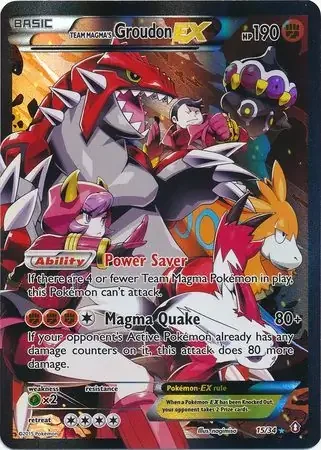
It wasn't all sunshine and holographic rays today. We saw some significant "red" in the charts, particularly in some high-end EX era cards.Team Magma's Groudon EX #15 (Pokemon Double Crisis) took a massive hit, dropping from $270.93 to $192.38, a 29% decline. This is particularly jarring because, just three days ago on April 27, it was holding steady at $270.93. This looks like a classic "profit-taking" event. When a card has been climbing (as seen in the April 2nd price of $268.82), a sudden drop often happens when the "whales" decide to liquidate their positions. The grading spread here is massive—a PSA 10 is sitting at $3350.05, which makes the $192.38 raw price look like a massive discount, provided you can find a copy that can actually grade well.
Reshiram #RC22 (Pokemon Legendary Treasures) followed a similar downward pattern, dropping from $99.99 to $71.5, a 28.5% loss. This card has been volatile; it was up to $98 in mid-April before this slide. It seems the "hype" around the Legendary Treasures era is cooling off momentarily.
The losses continued with MEGA Slowbro EX [Gym Promo] #71/M-P (Pokemon Japanese Promo), which plummeted 43.6% from $31 to $17.48, and Erika's Invitation #157 (Pokemon Chinese CSV2C), which fell 32.5% from $36.16 to $24.41. These look like corrections in the "collector-tier" promo market—prices were likely inflated by a recent surge in interest in Chinese and Japanese promos, and the market is now finding its floor.
Perhaps the most heartbreaking move of the day was Spinarak [Reverse Holo] #6 (Pokemon Go). This card has been on a roller coaster. It was $11.68 on April 6, climbed to $17.92 on April 27, and then cratered to $6.40 today—a 64.3% drop. When you see a reverse holo drop this hard, it’s usually a sign of "bulk dumping"—someone clearing out a collection and flooding the market with supply.
Market Snapshot: The Deoxys Phenomenon
If you want to know where the "big money" moved today, look no further than the Booster Box (Pokemon Deoxys). While the 1st Edition Base Set is the king of long-term value, the Deoxys Booster Box saw a staggering move, with the total value of the box jumping significantly. The sheer volume of movement in the Deoxys era assets suggests a massive influx of liquidity into the "mid-era" Japanese and English sets.Summary: What should you do?
* If you are a long-term holder: Ignore the volatility in the $10-$100 range. The heavy hitters like the Base Set era are showing incredible strength and upward momentum.* If you are a flipper: Watch the "promo" market. The volatility in the Japanese promos and the sudden drops in the "Gym" era cards suggest there is still high-frequency opportunity if you can catch the bottom of these corrections.
* The Warning Sign: Keep an eye on the "mid-tier" (Ex, DX, and early GX eras). The sudden drops in certain promo cards suggest that the "hype" phase of these sets might be cooling, and we might be entering a period of consolidation.
The bottom line: The market is currently bifurcated. The ultra-high-end (Base Set) is in a parabolic moon mission, while the mid-tier and modern promo market is experiencing a significant "shakeout."