
Card repair and restoration can take a Pokemon card from a graded 8.5 to a Mint 9 — or turn a $200 SGD raw card into unsellable scrap. Before you grab a cotton swab or crack open a slab, this guide covers what actually works, what doesn't, and the grading risks you need to weigh first.
Always repair cards at your own risk. Understand the altered card policies of any grading company before submitting a restored card.
What Can (and Cannot) Be Repaired
Set realistic expectations before picking up any tools. Not every flaw is fixable, and not every fix is worth attempting.
Can Potentially Be Repaired
- Surface dirt and grime — if sitting on top of the coating and not embedded
- Dents and indentations — where the card structure was pushed in but layers haven't separated
- Crimped or raised edges — where the edge has curled slightly outward
- Raised corners — when combined with moisture treatment and clamping
Cannot Be Repaired
- Edge whitening — the coating is physically gone; no method restores it
- Print lines — manufacturing defects baked into the card at production
- Deep holo scratches — permanent damage to the foil layer
- Bad cuts — off-centre or rough factory cuts cannot be corrected
Technique 1: Surface Cleaning
What You Need
- Fresh microfiber cloth (as padding base)
- Cotton swabs (Q-tips) — have at least 12 ready
- 50/50 solution of water and glass cleaner (e.g., Windex)
- Angled light source to reveal surface debris
Step-by-Step
- Inspect first: Hold the card at an angle under a light. Confirm the issue is surface debris, not scratches or embedded damage.
- Check under magnification: A loupe or basic microscope confirms whether specks are sitting on the coating. If they are, you're in good territory.
- Prepare your solution: Mix 50/50 water and glass cleaner. Use only a tiny amount on the swab — barely damp, not wet. Liquid near the card's edge absorbs into the uncoated cardboard.
- Light pressure first: Use a circular or sweeping motion at very low pressure. You're adding moisture to loosen dirt, not scrubbing. Dry dirt forced off can scratch the surface.
- Stay away from edges: The face and back have a glossy protective coat. The cardboard edge does not. Any moisture that wicks into the edge risks warping the card.
- Change swabs frequently: A swab that has picked up dirt becomes abrasive. Swap every 1–2 minutes. Expect to use 10–15 swabs for a thorough clean.
- Be patient: This takes 15–20 minutes per card. Rushing with heavier pressure causes scratches.
Safe for common and mid-value cards when done carefully. Do not clean expensive vintage cards — first edition shadowless Charizards and similar high-value cards should be left alone. The risk of damage far outweighs the potential grade benefit. The collector community consensus on this is unanimous.
Technique 2: Moisture Treatment & Clamping
Pokemon cards are two layers of cardboard pressed together with a glossy coating on both sides. The gloss protects the face and back from moisture, but the cardboard itself is pliable when exposed to ambient humidity. A humidor raises the enclosed humidity to ~70%, and the card absorbs this through the air — not direct water. Once pliable, the card can be reshaped and dried flat under compression.
What You Need
- Humidor with humidity gauge (available at tobacco specialty shops in Singapore — Far East Plaza, Orchard Road, or via Shopee/Lazada)
- Humidification device that produces humidity from water droplets
- Two sheets of clean plexiglass (Horme Hardware stocks clear acrylic sheets)
- 2–4 C-clamps (any hardware store)
- Penny sleeves
- Microfiber cloth
Step-by-Step
- Prepare the humidor: Add water to the humidification device. Wait for internal humidity to reach approximately 70% before placing the card inside.
- Place the raw card inside — no sleeve: The card needs direct contact with the humid air. A sleeve blocks the process.
- Set a 10-minute timer — do not exceed this: This is the most critical instruction. A card left in too long will crinkle and delaminate. There is no recovery from over-exposure. Set an alarm.
- Remove and handle gently: Use a sleeve to pick the card up rather than pinching the edges. The card will have a slight natural curve — this is normal and will press out during clamping.
- Work the dent: Place the card in a sleeve on a microfiber cloth. Place another sleeve on top. Using a soft but firm tool (foam over plastic works well), gently rub outward from the dent — pushing the material back in the direction it was dented away from.
- Clean the plexiglass sheets thoroughly: Even a small crumb will imprint directly into the moist card under clamping pressure. This is the most overlooked step and one of the most damaging mistakes.
- Sandwich the card between the plexiglass sheets: Centre the card between the two sheets.
- Apply C-clamps over the problem area: Position clamps directly over the dent or raised corner. Apply firm, even pressure. You should see the area responding and flattening. Add clamps to corners as needed.
- Leave overnight: Minimum 12–16 hours. The card needs to dry completely under compression before being removed.
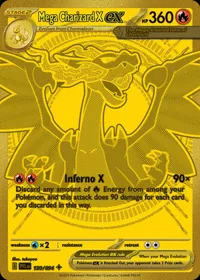
A Charizard EX graded 8.5 (Near Mint Plus) by TAG grading had a visible dent on the top edge, confirmed by TAG's own AI analysis report. After extraction from the slab, full moisture treatment and clamping, and resubmission to TAG, the card came back as a Mint 9. The dent was significantly reduced and the grade improved by half a point — a meaningful outcome.
The margin between correctly moisturised and destroyed is small. Over-exposure is permanent and irreversible. Debris on plexiglass imprints permanently. Only attempt this on cards where the grade upside clearly justifies the risk. Do not attempt on first edition, shadowless, or other high-vintage cards.
Technique 3: Targeted Edge Humidity
The cardboard edge is the one exposed area of a card — the gloss on face and back repels moisture, but raw cardboard absorbs it directly. This makes targeted edge humidity effective for crimps without needing a full humidor setup.
What You Need
- A drinking straw
- Fresh penny sleeves (free of debris)
- A card saver
- 1–2 C-clamps
Step-by-Step
- Identify the problem area: Look along the full edge in good lighting. A crimp will show the two cardboard layers separating or curling outward.
- Blow humid air through the straw directly onto the edge: Your breath is humid. The straw concentrates it. Hold close to the exposed cardboard edge and blow directly for several seconds. The glossy face and back won't absorb it — only the raw edge will.
- Repeat until the area responds: 2–3 rounds of breath application may be needed. Check between rounds whether the edge is beginning to respond.
- Sleeve and clamp immediately: Place the card in a fresh penny sleeve, then into a card saver. Apply a C-clamp over the treated area, pressing the crimp back flat. Ensure the card saver is level.
- Leave for 15–20 minutes, then evaluate: Some edges need 2–3 rounds. Successful results go from visibly crimped to nearly flat, with only minor light shimmer that blends into the card's natural surface.
Moderate risk for damage; higher risk of altered flag at grading. Edges are the most scrutinised area by grading companies. Even a well-executed edge repair can attract closer inspection. Understand the specific grading company's altered card policy before submitting any card that received edge treatment.
The Grading Risk: What PSA, TAG, and Beckett Actually Think
This is the section most "how to repair cards" guides skip. Grading companies have altered card policies, and submitting a restored card without understanding them can result in an altered designation — permanently reducing the card's value and resale potential.
What Gets Flagged as Altered
- Chemical treatments or coatings applied to card surfaces
- Physical reconstruction of edge material
- Evidence of holo layer polishing beyond very light surface treatment
- Any intervention that's detectable and goes beyond what the card's original materials could do naturally
What Typically Isn't Flagged
- Moisture treatment — the argument is that it works within the card's existing materials rather than adding anything external
- Light surface cleaning that removes external contamination
- Edge humidity treatment in many cases — though this depends on the grader and the result
TAG is unique: their AI card-recognition system identifies cards by their specific imperfections, not just the design. When a card is submitted to TAG, it receives a certification number tied to its unique damage profile. After the Charizard EX repair and resubmission described above, the card received a different certification number than the original 8.5 slab — suggesting the system identified it as a different damage profile. This may result in two population entries for one card. TAG's stated goal with their registration system is preventing population inflation, so the implications of this are worth understanding before resubmitting a TAG-graded card.
PSA grades primarily on visible condition at arm's length. Damage that isn't noticeable at normal viewing distance is weighted differently than obviously visible damage. This is why a well-executed dent repair can genuinely improve a PSA grade — not by tricking anyone, but because the card's condition at submission legitimately meets the criteria for a higher grade.
Quick Reference: Risk vs. Reward
| Technique | Best Use Case | Risk Level | Grading Impact |
|---|---|---|---|
| Surface cleaning | Dirt on common/mid-value cards | Low | Positive if done correctly |
| Moisture + clamping | Dents on cards approaching a higher grade | High | Can improve by 0.5–1 grade |
| Edge humidity | Minor crimps before raw sale/grading | Moderate | Risk of altered flag |
| Holo polishing | Very light surface marks only | Moderate | Limited; overuse = altered flag |
Where to Find Supplies in Singapore
Card repair tools don't require specialty stores — most can be sourced locally:
| Item | Where to Buy |
|---|---|
| Humidors | Tobacco shops at Far East Plaza, Orchard Road, or via Shopee/Lazada |
| Plexiglass/acrylic sheets | Horme Hardware — can be cut to size |
| C-clamps | Horme Hardware, Home-Fix, or any hardware chain |
| Cotton swabs & microfiber cloths | Guardian, Watson's, or any household store |
| Card savers & penny sleeves | Bricks Play, DEKTCGshop, and Concept City — buy in volume |
The Bottom Line for Singapore Collectors
Card repair is a legitimate skill in the collecting hobby and there are real, documented grade improvements from these techniques. But the margin for error is small and the consequences of mistakes are permanent.
- Low-value cards are the right place to practice. Get comfortable with the technique before the stakes are real.
- Mid-value cards with a clear grade upside are worth evaluating on a case-by-case basis — weigh grading cost, potential grade improvement, and risk of damage or altered flag.
- High-value vintage cards should be left alone unless you have significant hands-on experience and professional tools.
And always — always — set a timer before putting a card in the humidor.